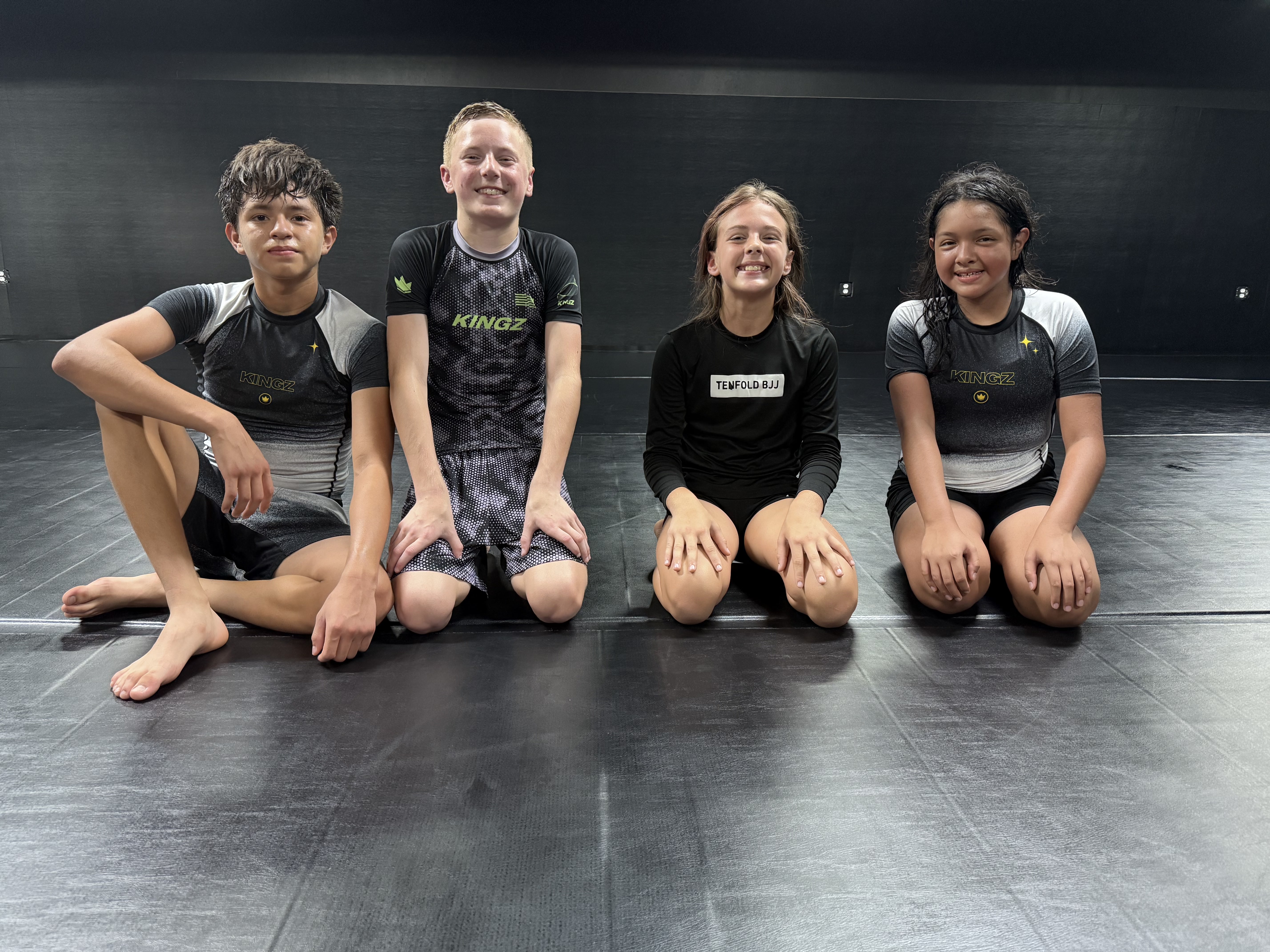
KIDS
PROGRAM
Developing the next generation of grapplers and problem solvers — structured, task-focused training for ages 8–12.
First class free. $100 a month after that, no contract.
REAL SKILL,
REAL FUN.
The Ann Arbor BJJ Kids Program develops legitimate grapplers who can problem-solve. We teach Brazilian Jiu-Jitsu through games and live problem-solving — every game has a starting position, a goal, and rules, and kids solve it against a partner. Coaches who follow the research call it the Constraints-Led Approach.
Kids find their own answers inside the game, which is why the skill sticks. The result is adaptable, functional Jiu-Jitsu that holds up under pressure. Classes are engaging and structured, with tasks scaled to meet each child at their level. All training is No-Gi.
Every class is taught by Coach Nora from a curriculum designed and overseen by Head Coach Royce Miller — a black belt under Margot Ciccarelli with a degree in early childhood education.
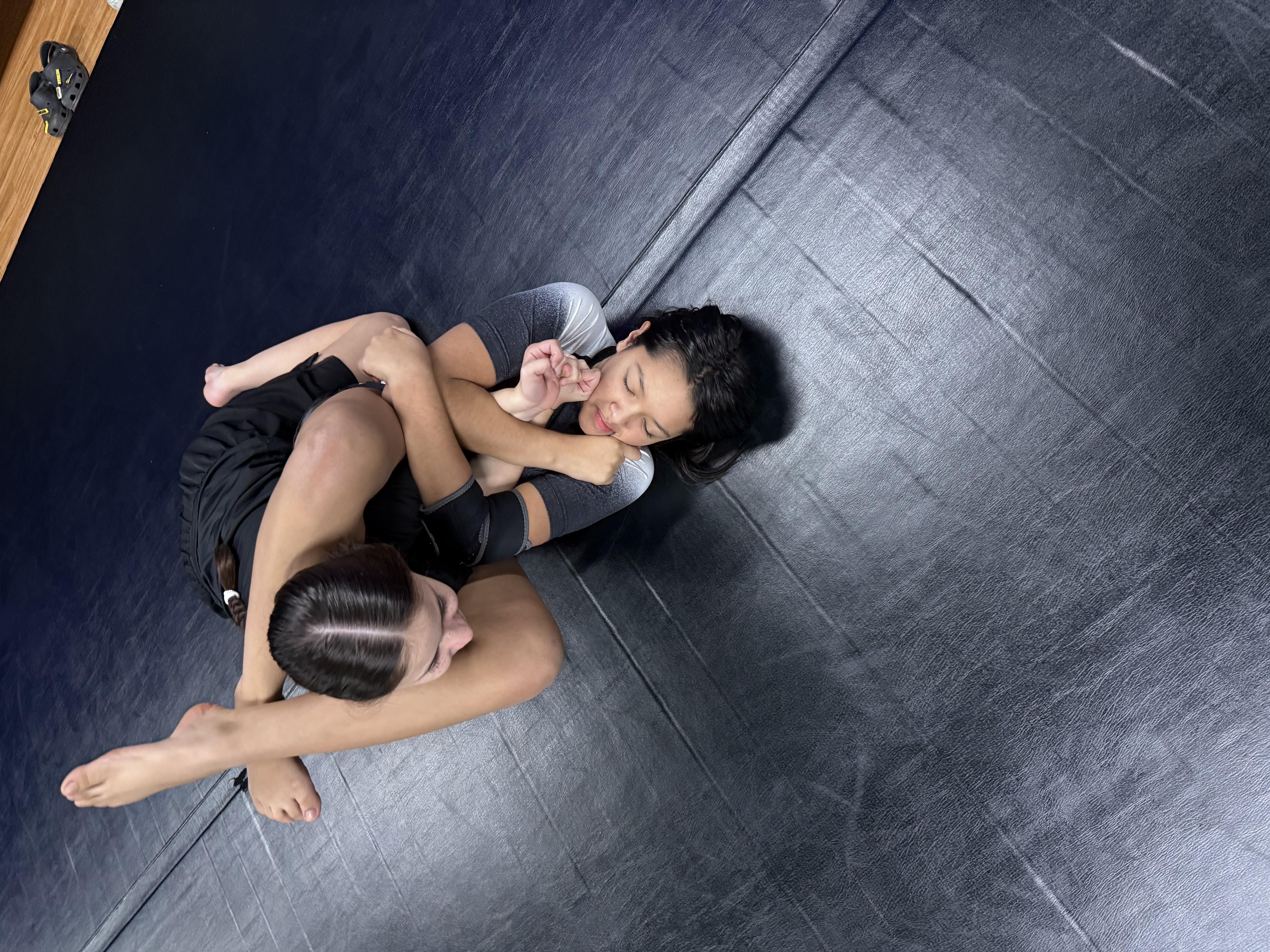
KIDS BJJ
AGES 8–12.
One structured class built on live problem-solving. Kids work through live movement problems with partners — developing decision-making, creativity, and collaboration. Tasks scale to meet each child where they are, so newer and more experienced kids train in the same room.
Real Brazilian Jiu-Jitsu, taught the way kids this age actually learn — engaging enough to keep them coming back, structured enough that they're building genuine skill. Suitable for all experience levels. $100 a month, and the first class is free.
Age groups are a starting point, not a wall. A capable 7-year-old can move up from the 4–7 class with coach approval, and at 13 kids move up to the adult program as their regular home, though they can stay in kids if we think that's the safer fit. Kids who want to train more than two nights a week: see the Athlete Track below.
The GymDesk app for parents — gym updates, class check-ins, and upcoming tournaments. Our own app, with the curriculum and more in one place, is on the way.
- Build adaptable Jiu-Jitsu skill through live problem-solving
- Strengthen decision-making and focus under challenge
- Improve coordination, balance, and body control
- Build confidence through successful task completion
- Develop communication and teamwork
- Prepare older kids for the move up to the adult program
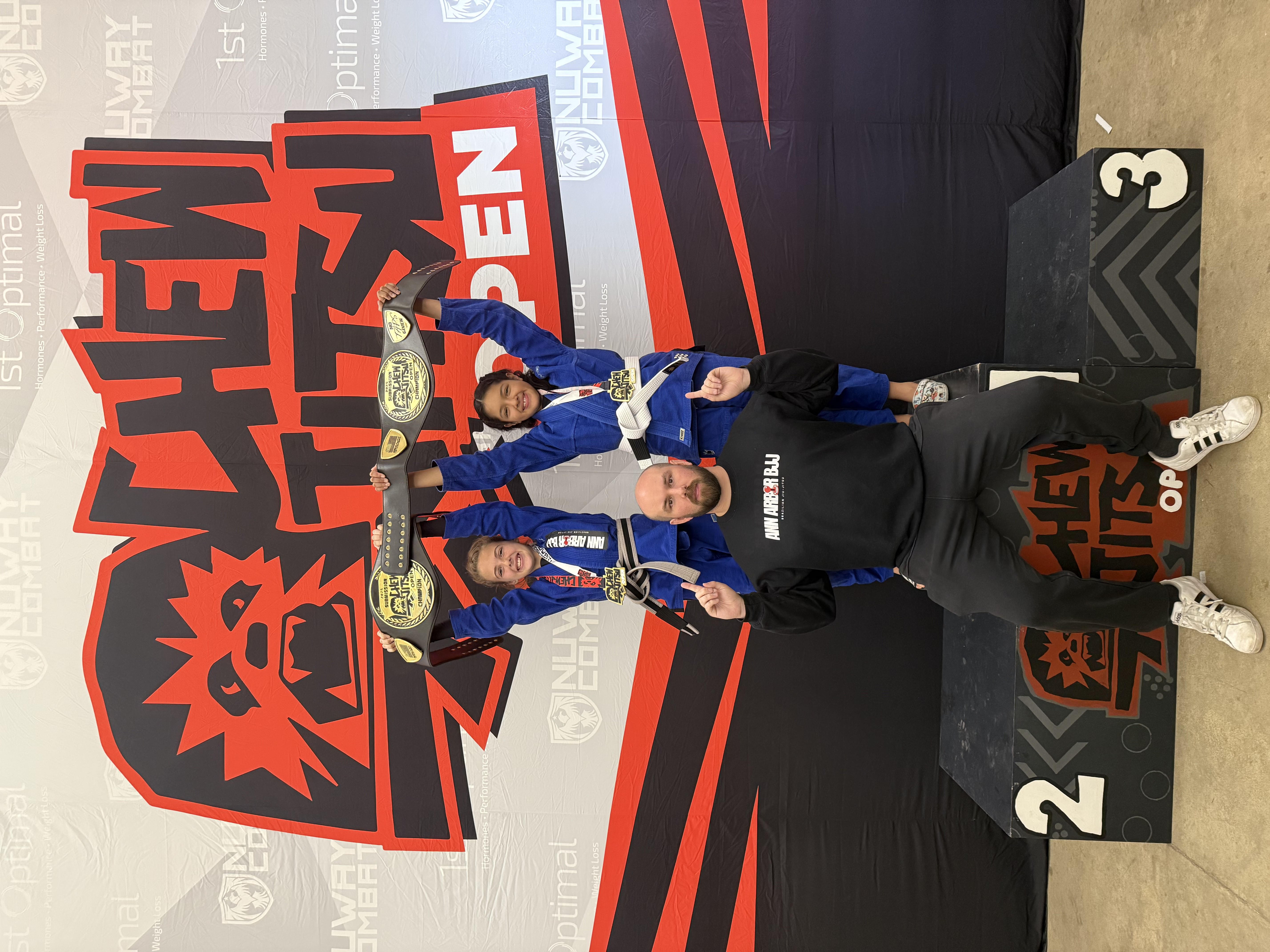
THE KIDS
ATHLETE TRACK.
For the kid who asks to train more. Everything in the Kids Program, plus coached strength training and skill work seven days a week — the deepest coaching we give any kid in the gym. Entry is by coach approval, not age: maturity, focus, and readiness decide, so a mature 7-year-old can earn a spot the same way a 12-year-old can.
- Mon · Wed · Fri · 5:45–6:30 PM · Coach RoyceKIDS STRENGTHReal strength training, weights included. Age-appropriate lifts and loads chosen from the science, technique before weight, and a coach on every rep. Each session is planned for the kids who booked — reserve in GymDesk by 3:00 PM the day of.
- Mon–Fri & Sun · 6:30 PM · Sat · 10:00 AMKIDS SKILL WORKReal skill work, not more of the same. Every session is built around a task — a specific problem to solve, played live against a partner who is trying to win. Kids who are ready for more get their challenge point raised, and every kid goes into rounds with an intention and a coach watching whether it happens.
SKILL OVER
RANK.
Kids at Ann Arbor BJJ earn belts as they progress through the IBJJF system. But the focus is always real skill — the kind that shows up when they're rolling and competing. Belts come when the skill is there.
LITTLE KIDS · AGES 4–7.
A focused half hour of movement games, grappling basics, and listening skills — Tuesday and Thursday at 6:00 PM. It runs during the 8–12 class, so siblings train at the same time, on the same $100 membership.
Little Kids Program
FIRST CLASS
IS FREE.
Developing legitimate grapplers and problem solvers — under clear instruction, structured tasks, and a system built for long-term progress. $100 a month if they love it.
Downtown Ann Arbor · Brazilian Jiu-Jitsu for Ages 8–12 · Serving Washtenaw County